
Reviewed · WALKING TOURS
Taipei Old Town – Taiwan Introduction Walking Tour (Tip-Based)
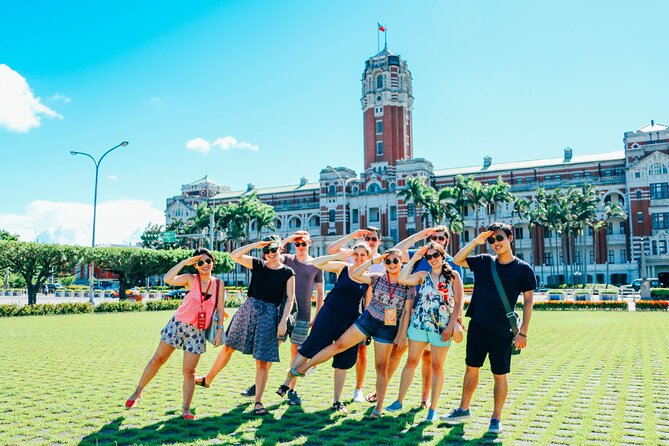
Taipei’s story is complicated, and this walk gives you a useful way into it. In just over two hours, you move from the painful memory of the 228 Incident to Japanese colonial architecture, street markets, modern shopping streets, and the political questions that still shape Taiwan. The history is the main event, not a bit of commentary added between photo stops.
I like the route’s focus on Taiwanese identity and politics, subjects that are easy to miss on a standard sightseeing walk. I also like the guide-led pace, with time for questions, shade, water breaks, and sometimes a helpful food or ice cream suggestion. The main consideration is heat and humidity, plus the fact that the walking route includes steps and uneven stone surfaces. The $5 fee is only a booking charge, so you should budget an additional tip.
Key points before you book
- A history-first route: Learn about Qing influence, Japanese rule, the 228 Incident, Chiang Kai-shek’s arrival in Taiwan, and the island’s modern political identity.
- Five meaningful stops: The walk links 228 Peace Memorial Park, Chengzhong Market, Ximending, the Red House, and Taipei Zhongshan Hall.
- Useful on your first day: The route helps you understand central Taipei before you explore on your own.
- Guides with different styles: Bessy, Leo, James, Vincent, Chester, Tâilé, Veronica, Bri, and Andy have led walks, with humor and storytelling often part of the experience.
- Low upfront cost: The booking price is $5 per person, but the guide’s tip is not included.
- Plan for the weather: Taipei heat, humidity, rain, steps, and stone paths can affect your comfort.
Why this old-town walk matters
I like tours that explain a place instead of simply pointing at buildings. This one is built around a central question: how did Taiwan become what it is today? That takes you beyond old façades and shopping streets into the forces that shaped the island’s people and politics.
You hear about the foreign powers that ruled Taiwan, including the Qing and Japanese periods, then move into the postwar era and the 228 Incident. The guide also connects Chiang Kai-shek’s flight to Taiwan with the political system that followed. That context helps you read the city differently for the rest of your trip.
The subject matter is serious, but the delivery is not meant to feel like a lecture hall. James, for example, is described as using humor and anecdotes, while guides such as Bessy, Leo, Vincent, and Tâilé are praised for clear explanations and lively storytelling. Your guide will vary, so the tone may lean more comic, more academic, or more conversational.
This is especially useful if Taiwan’s history is new to you. You do not need a background in East Asian politics to follow the walk. The best guides explain how different periods affected ordinary people and how the past connects with Taiwan’s current identity.
Other guided walks around Taipei:
- [Private Tour] Shilin Night Market Walking Tour With a Private Tour Guide (2-hr)
★ 5.0 · 123 reviews - Taipei: 2-Hour Raohe Night Market Walking Tour
★ 4.6 · 69 reviews - 2-hr Raohe Night Market Walking Private Tour with a Tour Guide
★ 5.0 · 61 reviews
Meeting near NTU Hospital Station
The meeting point is at street level near NTU Hospital Station Exit 4, by YouBike 2.0100 in Zhongzheng District. The station connection makes this a practical start if you are staying near Taipei Main Station or using the MRT.
Arrive with enough time to find the street-level meeting point. The tour provides a WhatsApp group link for people who are late or lost, which is useful in central Taipei, where large roads, station exits, and underground passages can make a simple meeting point less simple.
The walk lasts about 2 hours and 15 minutes. It is not designed as a hard workout, but you will be outside and on your feet for most of the route. Comfortable shoes matter. Bring water, especially in warm weather, and have rain protection during Taipei’s wet months.
The booking information describes the activity as private, meaning only your group should participate. At the same time, practical descriptions of the walk refer to groups of more than 10 people. Group arrangements may therefore vary, so it is sensible to confirm the format if a private experience is important to you.
228 Peace Memorial Park: starting with Taiwan’s painful past
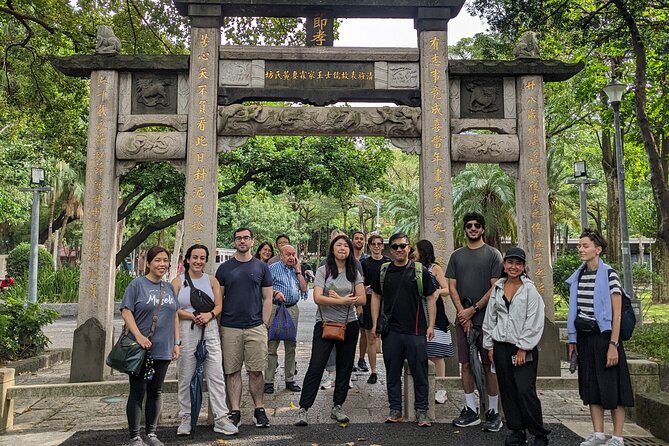
The first major stop is 228 Peace Memorial Park, where the tour spends about 20 minutes. This is not a light introduction to Taipei. The park memorializes victims of the February 28 Incident of 1947, one of the most important and painful events in modern Taiwanese history.
A good guide will explain the event in plain language and place it within the wider shift from Japanese colonial rule to the rule of the Republic of China. The subject can be emotionally difficult, but it gives the rest of the tour a clear purpose. You begin by considering memory, political repression, and the long period when open discussion was restricted.
The park itself also offers a break from traffic and dense city streets. You are still in central Taipei, but the setting allows the guide to pause and explain the background without rushing from one landmark to another.
This stop is one reason I would take the walk early in your visit. Once you understand the significance of 228, later references to Taiwan’s political development make more sense. It also encourages a more thoughtful approach to memorials and public spaces across the city.
The Presidential Office Building and the marks of Japanese rule
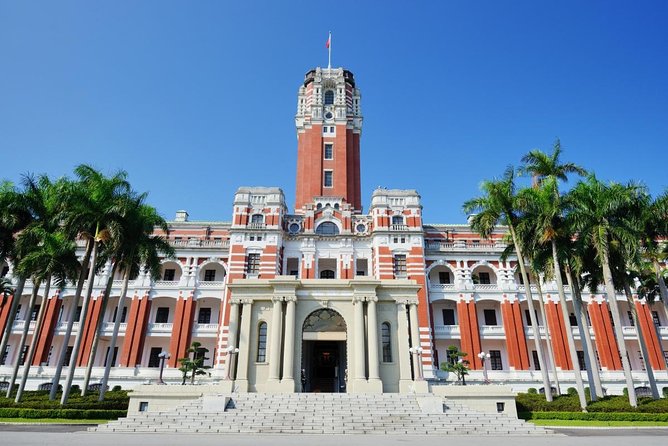
The route continues toward the Presidential Office Building, one of Taiwan’s most recognizable structures. It was originally built during the Japanese colonial period to serve as the Office of the Governor-General of Taiwan.
The building gives you a visible link between architecture and power. Its original function tells you who controlled the island at the time, while its present role points to Taiwan’s modern government. The guide can use the building to explain how colonial administration shaped Taipei’s streets, institutions, and public image.
This is a short exterior-focused stop rather than a long interior visit. That keeps the walk moving, but it also means you should not expect a tour of the building itself. The value comes from the explanation and the way the building fits into the wider story.
I like this part because it avoids treating colonial architecture as decoration only. You get the style, but also the political meaning behind it.
Same base, a completely different day out:
- From Taipei: Shifen, Jiufen, and Yehliu Guided Day Trip
★ 4.6 · 1,654 reviews - Full-Day Private Custom Taipei City Tour
★ 5.0 · 911 reviews - From Taipei: Yehliu, Jiufen, and Pingxi Day Tour
★ 4.7 · 892 reviews - Taipei: Jiufen Night View and Shifen Day Tour
★ 4.6 · 870 reviews
Chengzhong Market: a quick look at everyday Taipei
Chengzhong Market brings the route down from government buildings and national history to ordinary shopping. The covered market sells logo T-shirts, household goods, and snacks, including ba-wan dumplings.
The stop lasts about 10 minutes, so think of it as a brief orientation rather than a full food tour. You may have time to look around and note the mix of practical goods and local food, but snacks are not included in the tour.
This is a useful contrast. Taipei’s story is not only told through memorials and official buildings. It also appears in markets, food, family shopping, and the everyday use of central neighborhoods. If you want to buy something, carry small cash and keep the stop brief so the group can stay together.
Because the walk does not include snacks, you should save your appetite and budget for later. The market introduces the setting, but you will need to choose and pay for anything you eat yourself.
Ximending: Taipei’s modern culture center
The longest stop is Ximending, where you spend about an hour. Often compared with Harajuku, this pedestrian area is filled with fashion shops, restaurants, clubs, bars, and youth culture.
Ximending may look far removed from the solemn opening at 228 Peace Memorial Park. That contrast is exactly what makes the route work. The walk shows you a Taipei that is commercial, social, and constantly changing, while the guide explains how the neighborhood fits into the city’s wider cultural life.
You get time to take in the streets rather than simply stopping for a quick photograph. Depending on the group and guide, this may also be the best point for questions about current Taiwan, popular culture, and daily life.
Do not expect an organized shopping session or a long restaurant stop. The hour is mainly for seeing the area and understanding its role. If you want to return later for shopping or nightlife, the walk helps you get your bearings.
Ximending can be crowded and noisy, so stay aware of the group. It is also one of the easier places to continue exploring after the tour ends.
The Red House: a Japanese-era building with a creative life
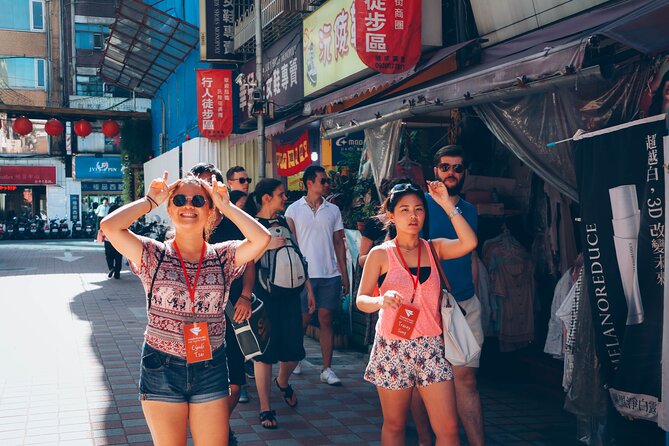
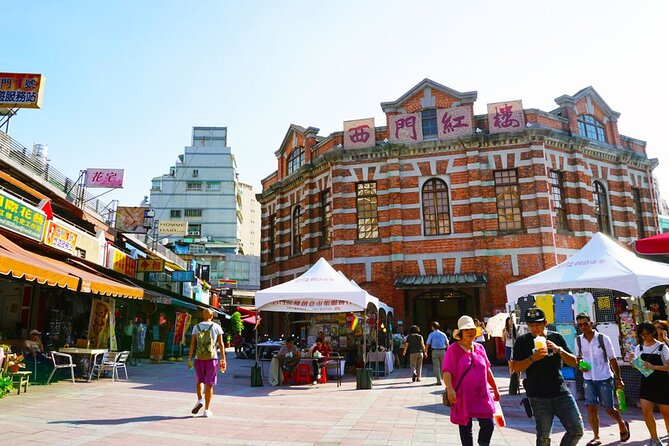
The Ximen Red House is a striking Western-style building constructed by the Japanese in 1908. Today, the building and its surrounding square are linked with Taipei’s creative and cultural scene, including exhibitions and performances.
The Red House is a good example of Taipei’s ability to give an old structure a new purpose. Its Japanese origins connect to the earlier part of the tour, while its present use points toward contemporary culture and creative work.
The planned stop is about 20 minutes. That is enough for an explanation and a look around, but not necessarily enough to see every exhibition or performance. If something catches your eye, note the location and return later.
The square also provides a natural pause after time in the busy Ximending streets. It is one of the route’s most photogenic places, but the building’s value is more than its appearance. Listen for the explanation of how its function changed over time.
Taipei Zhongshan Hall and the walk’s closing ideas
The final named stop is Taipei Zhongshan Hall, originally built as the Taipei City Public Auditorium. The visit lasts about 10 minutes.
Like the Presidential Office Building, Zhongshan Hall works as both a historic structure and a clue to Taipei’s changing civic life. Its original public function allows the guide to discuss how official spaces were used and how the city’s institutions developed.
The route ends at No. 4, Chengdu Road, in Wanhua District. By this point, you have moved through memorial space, government architecture, a traditional market, a modern pedestrian district, and a historic cultural building. That range gives you a useful first map of central Taipei.
The walk may run longer if the group has many questions. One account describes the tour stretching beyond its planned length because the group wanted a fuller history lesson. That can be a benefit if you enjoy discussion, but it may matter if you have a tight schedule afterward.
What the guides do best
The strongest part of this experience is the human explanation. Taiwan’s past includes colonial rule, political violence, migration, authoritarian government, and present-day questions of identity. A flat list of dates would not help much. You need someone who can connect the events.
Bessy is described as spending time on the Qing and Japanese periods, the 228 Incident, Chiang Kai-shek’s arrival, and Taiwan today. Leo is associated with clear explanations of the country’s complicated past and an engaging manner. Tâilé is noted for linking history, politics, and culture in a fun way.
James brings a comic touch, including stories and recommendations for food or ice cream. Chester is described as friendly and funny, while Vincent is praised for his passion and professional approach. Other listed guides include Veronica, Bri, and Andy.
The guide you receive will shape the experience. The shared strength across these descriptions is enthusiasm and a willingness to answer questions. If you want a silent stroll with only a few facts, this is not the right format. If you like asking why, you will get more from it.
Pace, weather, and comfort
Taipei can be hot, humid, and rainy. The route is manageable, but weather changes how enjoyable it feels. One guide adjusted the walk during heavy rain by using covered areas for explanations. Another made sure the group had shade and a chance to refill water on a hot day.
You may encounter steps and uneven stone paths. Wear walking shoes rather than sandals with poor support. Bring water, sun protection, and rain gear as needed.
Some guides add a drink, ice cream stop, or food suggestion, but these are not guaranteed inclusions. Snacks are not part of the tour price, so carry money if you want something during or after the walk.
Most people can take part, and service animals are allowed. The experience is near public transportation, which makes both arrival and onward sightseeing fairly simple.
Is $5 good value?
At $5 per person, the upfront price is unusually low for a guided introduction lasting more than two hours. The real cost is the tip you give at the end, since the booking fee does not include the guide’s gratuity.
That tip-based model can offer good value if you want a broad introduction without committing to an expensive private tour. You are paying for the guide’s time, preparation, route, and answers, not for admission tickets or included food. The main stops have free admission.
I would view the $5 as a small reservation charge rather than the complete tour price. Decide in advance what you feel the guide’s work is worth, then bring suitable cash or payment for the tip and any drinks or snacks.
Who should book this walk?
I would choose this tour for a first day in Taipei, especially if you want history before temples, museums, or food trips. It gives you a basic map of central neighborhoods and helps you understand what you are seeing later.
It suits adults and older children who can handle a couple of hours outside. The pace is generally comfortable, and one account specifically describes it working well for children, but heat, humidity, and steps still matter.
History fans will get the most from the walk, as will anyone curious about Taiwan’s political identity. It is less suitable if you want a food-focused tour, extensive shopping time, or a long visit inside each building.
Should you book the Taipei Old Town walk?
Book it if you want a serious but approachable introduction to Taipei, with 228 Peace Memorial Park, Japanese-era architecture, markets, Ximending, and Taiwan’s modern politics in one route. The low booking price makes it an easy choice for your first day.
Skip it if you dislike group discussion, walking in uncertain weather, or a tour centered on political history. Also confirm the group format if you specifically need a fully private experience, since the practical group size may vary.
For most first-time visitors, this is a useful way to get your bearings fast and understand why Taipei looks and feels the way it does.
FAQ
How long does the Taipei Old Town walking tour last?
The tour lasts approximately 2 hours and 15 minutes. It may run longer if the group has many questions and the guide continues the discussion.
What is the price of the tour?
The booking price is $5 per person. The tip for the guide is not included, and snacks are also not included.
Where does the tour begin?
Meet at street level near NTU Hospital Station Exit 4, by YouBike 2.0100 in Zhongzheng District, Taipei.
Where does the tour end?
The listed ending point is No. 4, Chengdu Road, Wanhua District, Taipei City, Taiwan 108.
Which places are included on the route?
The route includes 228 Peace Memorial Park, the Presidential Office Building area, Chengzhong Market, Ximending, Ximen Red House, and Taipei Zhongshan Hall.
Is food included?
No. Snacks are not included. You may find food and drinks along the route, but you must pay for them separately.
Is the tour suitable for most people?
Most people can participate, and service animals are allowed. The walk includes outdoor conditions, steps, and stone paths, so comfortable shoes are recommended.
Can I cancel for a full refund?
You can cancel at least 24 hours before the start time for a full refund. Cancellations or changes made less than 24 hours before the start time are not refunded. If poor weather or an insufficient number of participants causes the tour to be canceled, you will be offered another date or experience, or a full refund.
Just added around Taipei
- Iconic Food Tour: Local Street Food, Drinks & Sites★ 4.4 · 3 reviews
- Keelung: Shore Excursion Private 8H Taipei Urban Adventure★ 4.7 · 4 reviews
- Keelung: Heping Island Geopark Entry Ticket★ 5.0 · 3 reviews
- From Taipei: Private Yangmingshan Volcano and Nature Tour★ 5.0 · 9 reviews
- From Taipei: Taipingshan National Forest Private Day Tour★ 5.0 · 6 reviews
- From Taipei: Thousand-Island Lake & Tea Museum Private Tour★ 4.7 · 5 reviews
- From Taipei: Old Gold Rush Town Jiufen Guided Night Tour★ 4.4 · 5 reviews
- From Taipei or Taichung: Sun Moon Lake Day Trip & Boat Ride★ 4.6 · 5 reviews
Walking Tours, compared.
![[Private Tour] Shilin Night Market Walking Tour With a Private Tour Guide (2-hr)](https://images.introducingtaiwan.com/wp-content/uploads/private-tour-shilin-night-market-walking-tour-with-a-private-tour-guide-2-hr-400x266.jpg)
[Private Tour] Shilin Night Market Walking Tour With a Private Tour Guide (2-hr)
Read our review →
Vintage Taipei – Best of Taiwan & Sunset Walking Tour (Tip-based)
Read our review →
Taipei’s Origin & Longshan Temple – Taiwan Cultural Walking Tour
Read our review →
Private Keelung Cultural Walk: Markets, Streets & Local Life
Read our review →
Browse the lists this tour appears in