
Reviewed · HISTORICAL TOURS
Taipei Historic Shared Walking Tour
Taipei’s past unfolds block by block on this three-hour walk through old West Taipei. You begin at Longshan Temple, move through former trading streets and Japanese-era buildings, then finish at Chiang Kai-shek Memorial Hall. It is a useful way to see how Qing-era traditions, Japanese rule, and the post-1949 Chinese Nationalist government shaped the city.
I like two things right away: the route links major sights in a sensible order, and the $5 price gives you a strong introduction before you decide how much more time to spend in Taipei. Guides such as Amy, Andy, Mabel, Susie, Huawen, Eric, Luke, and Pauline have been praised for clear English, good humor, and thoughtful answers.
The main drawback is that this is a shared walking tour, not a private deep study. A Saturday group can be large enough to split into two groups, and children may find three hours of history and walking tiring. Wear comfortable shoes, and remember that the guide’s tip is not included.
Key points to know before you book
- Six major stops in three hours: Longshan Temple, Bopiliao Historic Block, Ximen Red House, the Presidential Office Building, 228 Peace Memorial Park, and Chiang Kai-shek Memorial Hall.
- A history-first route: You move from late Qing traditions through Japanese colonial rule and into the political story of modern Taiwan.
- English-speaking local guides: Guides named in tour feedback include Amy, Andy, Mabel, Susie, Huawen, Eric, Luke, and Pauline.
- A very low booking price: The $5 fee covers the system charge and professional English guide, but not the tip.
- A group of up to 20: The tour is shared, and larger gatherings may be divided between guides.
- A practical first-day choice: The route ends at Liberty Square, close to Chiang Kai-shek Memorial Hall, so you finish near one of Taipei’s best-known landmarks.
Why this West Taipei route works
This tour is built around a simple idea: old Taipei makes more sense when you walk through it in historical order. The western part of the city was once the main center of political and commercial life. Instead of treating each attraction as a separate photo stop, the route connects them.
You begin with traditional religious life at Longshan Temple. Then you see an old commercial street, a Japanese colonial market building, the former center of Japanese administration, a park tied to a painful chapter in Taiwanese history, and finally the grand memorial built for Chiang Kai-shek.
I like this shape because it gives you a framework for the rest of your stay. You will not learn every detail of Taiwan’s past in three hours, but you will leave with a clearer sense of the major eras and the competing memories attached to Taipei’s buildings.
The route also covers several parts of the city that are easy to visit on your own but harder to understand without context. A temple roof, a red-brick market, or a huge memorial hall can look impressive in isolation. A good guide explains why each place was built and how its meaning changed.
More old Taipei to walk through:
- From Taipei: Pinglin Tea Culture and Maokong Guided Day Tour
★ 4.8 · 104 reviews - Taipei Cooking Class & Market Adventure in Historic Dadaocheng
★ 5.0 · 77 reviews - Pinglin Tea Culture & Maokong Day Tour from Taipei
★ 5.0 · 35 reviews
Longshan Temple and the older religious heart of Taipei
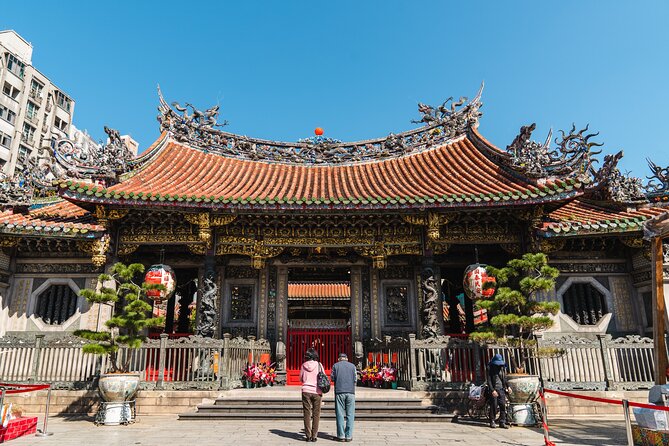
The first stop is Longshan Temple, where you spend about 40 minutes. The temple was first established in the 18th century by Chinese immigrants who came to Taipei. It became the religious center of the local community and helped anchor Monga, the district that grew around it.
This is a strong opening because it places you in the late Qing period before the tour moves into colonial and modern politics. The temple represents the traditions that immigrant communities brought with them, as well as the local religious life that continued through later changes in government.
Your guide will share the stories and legends connected with the site. The precise experience can vary with the guide and the activity around the temple, but the stop is not just a quick exterior photograph. You have time to look at the building and hear why it matters to the surrounding neighborhood.
Longshan Temple is also a useful reminder that Taipei’s history is not only about presidents, military leaders, or official buildings. It is also about ordinary communities, belief, immigration, and the places people used to organize daily life.
Because this is an active religious site, you should be ready to follow the guide’s instructions and observe respectfully. The tour information lists admission as free.
Bopiliao Historic Block and Taipei’s trading past
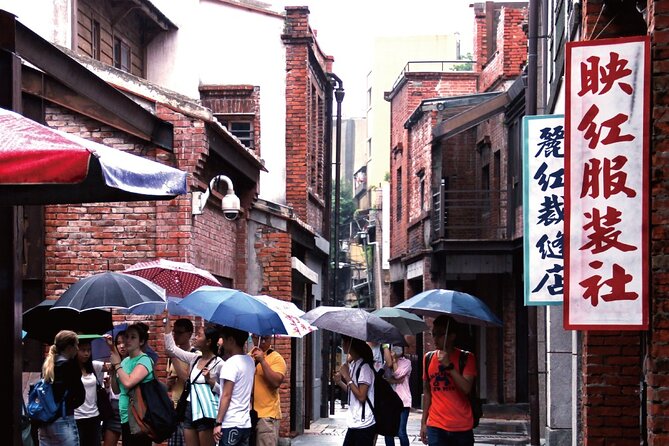
From Longshan Temple, the group continues to Bopiliao Historic Block for about 30 minutes. The name Bopiliao literally refers to skin peeling, an unusual detail that helps make the place memorable.
The area was once a commercial center in northern Taipei. Chinese immigrants traded here with Indigenous communities, and the street became part of the economic network that helped the city grow. That gives you a different view of the past from the one at Longshan Temple. The temple shows community and belief, while Bopiliao shows business, exchange, and the meeting of different groups.
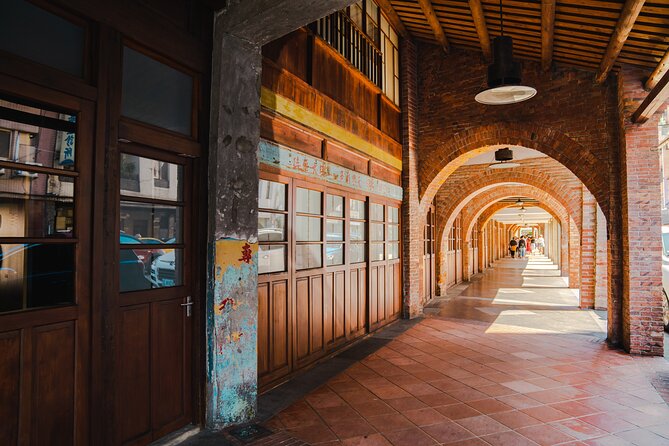
Look for the older street layout and historic façades as your guide explains how the district functioned. The stop is compact, so expect a focused explanation rather than a long free period. If you enjoy architecture, this is one of the places where the route’s walking format pays off. You can see how commercial activity shaped the buildings and streets rather than viewing them from a bus window.
The 30-minute visit also keeps the tour moving. Six stops in three hours leaves little room for long independent exploration, so you should think of Bopiliao as an introduction. If it catches your interest, you may want to return later with more time.
Ximen Red House and the changing face of Ximending
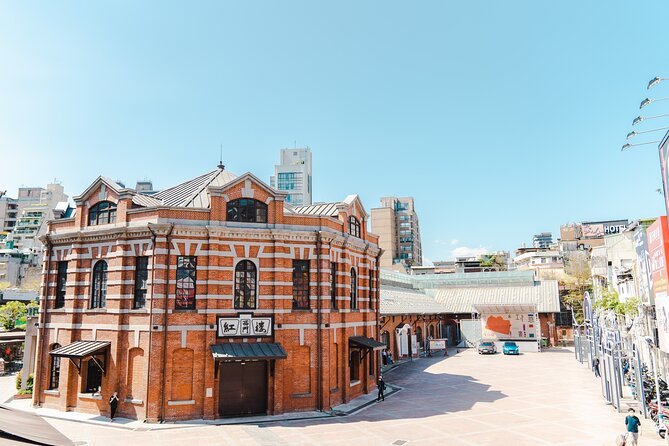
The next stop takes about 30 minutes and brings you to Ximen Red House in Ximending. The building was first constructed as a public market and carries clear architectural features from Japan’s colonial period.
That change in use is central to the tour’s theme. A market building created under Japanese rule later became a theater after World War II and the end of Japanese administration. The Red House therefore reflects more than one era. Its walls show colonial design, while its later role points to the cultural life of postwar Taipei.
This stop can be especially helpful if Ximending feels like a modern shopping and entertainment area when you first see it. The lively streets around it can distract from the older structure. A guide gives you a reason to pause and read the neighborhood as a place with several layers.
I also like the contrast here. The tour moves from the long religious continuity of Longshan Temple to the commercial past of Bopiliao, then to a building shaped by Japanese planning and later Taiwanese urban culture. You get a quick lesson in how a city can keep changing without wiping away every earlier use.
The tour does not promise time for shopping or a performance. Its purpose is historical orientation, so keep your attention on the building and the explanation.
Other guided walks around Taipei:
- Taipei Old Town – Taiwan Introduction Walking Tour (Tip-Based)
★ 5.0 · 175 reviews - [Private Tour] Shilin Night Market Walking Tour With a Private Tour Guide (2-hr)
★ 5.0 · 123 reviews - Taipei: 2-Hour Raohe Night Market Walking Tour
★ 4.6 · 69 reviews - 2-hr Raohe Night Market Walking Private Tour with a Tour Guide
★ 5.0 · 61 reviews
The Presidential Office Building and Japanese colonial power
Only a short walk from Ximending is the Presidential Office Building, visited for about 20 minutes. The building was completed in 1919 and was originally designed for the Office of the Governor-General of Taiwan during Japanese rule.
This is an important shift in scale. At Longshan Temple and Bopiliao, you are looking at community and commerce. Here, you are looking at the machinery of colonial government. The building helps explain how Japanese authority was organized and displayed in Taipei.
The stop is brief, but its location makes the contrast sharp. You move from the cultural energy of Ximending to a formal political center within minutes. That physical change helps make the history easier to follow.
You should expect to view the building from the outside rather than treat this as an interior visit. The value comes from the guide’s explanation of its original purpose and its continuing role as Taiwan’s political center.
This is also where the tour makes clear that Taipei’s history is not a straight line from one government to another. Buildings can survive political change, but their meaning shifts. A structure built for Japanese colonial administration later became associated with Taiwan’s own government.
228 Peace Memorial Park and a difficult chapter
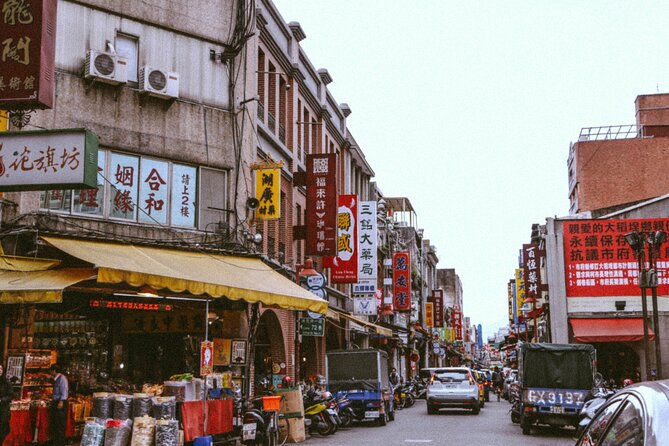
The group then reaches 228 Peace Memorial Park, with about 30 minutes here. The park was first created in 1908 as Taihoku New Park during the Japanese colonial period. It was designed as Taiwan’s first European-style park.
Its history changed sharply in 1947. The park became a scene of protest against the Kuomintang-led Republic of China government. The events connected with 228 are among the most painful parts of modern Taiwanese history, and the stop gives the guide a place to explain that political tension.
This is not a light sightseeing pause. You should expect a more serious tone and an introduction to a subject that may be unfamiliar if you are visiting Taiwan for the first time. The park’s open setting also shows how public spaces can become political spaces.
I value the inclusion of this stop because a tour of Taipei’s historic buildings would be incomplete without it. The route does not present the city as a collection of attractive façades. It acknowledges conflict, repression, protest, and the difficult work of remembering.
Thirty minutes is enough for basic context, but not for a full study of the 228 Incident. If this subject matters to you, treat the tour as a starting point and plan further reading or a separate visit after you have your bearings.
Chiang Kai-shek Memorial Hall and the end of the route
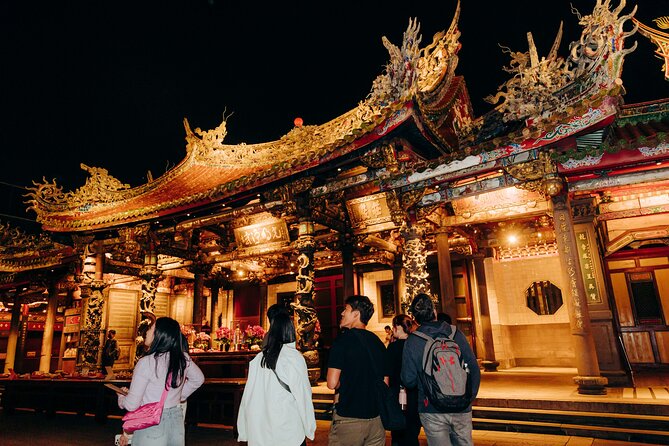
The final stop is Chiang Kai-shek Memorial Hall, where the tour spends about 30 minutes. The walk ends at Liberty Square, at No. 21 Zhongshan South Road, beside the memorial complex.
The monument was built in memory of Chiang Kai-shek, who served as president of the Republic of China from 1948 to 1975. Its size and formal design reflect the political ideals of the government that arrived in Taiwan after 1949. The guide connects the site with Chiang Kai-shek’s vision of the Republic of China and the government’s attempt to preserve a Chinese national identity in Taiwan.
This ending works because it brings the earlier stops together. Longshan Temple reflects Chinese immigrant traditions. Bopiliao shows trade and local growth. Japanese-era buildings reveal colonial rule. The park introduces postwar conflict. The memorial hall brings you to the grand political expression of the post-1949 government.
The site is also a practical finishing point. You do not end in an obscure side street. You finish at one of Taipei’s best-known monuments and can continue exploring the area afterward, although the tour itself ends at the stated meeting point.
As with the Presidential Office Building, the main benefit is interpretation. The architecture is easy to photograph, but the guide helps you understand why the memorial was built and what its presence says about Taiwan’s political past.
Guides, group size, and walking comfort
The tour includes a professional English guide, and the strongest part of the experience is the human explanation between stops. Amy and Andy are described as engaging and clear, while Eric and Mabel are noted for giving useful context on culture, architecture, food, religion, and history. Pauline has also guided the walk in three languages.
Those details matter because the route covers sensitive and complicated subjects. You need a guide who can explain without turning the tour into a lecture. The named guides have been praised for answering questions, keeping the mood friendly, and making the information accessible.
The maximum group size is 20. That is small enough for a shared city walk to remain manageable, but a popular Saturday session may be divided into two groups, each with its own guide. A larger group can make it harder to hear at busy points, so stay close and pay attention when the guide gathers everyone.
You should plan for a full three hours on foot. The schedule allows roughly 40 minutes at Longshan Temple and 30 minutes at each of Bopiliao, Ximen Red House, 228 Peace Memorial Park, and Chiang Kai-shek Memorial Hall, with 20 minutes at the Presidential Office Building. Comfortable shoes are not optional advice here. They are the sensible choice.
The tour starts at 10:00 a.m. at the Taipei Historic Free Walking Tour meeting point near Like It Formosa108, at Section 1, Xiyuan Road in Wanhua District. The exact meeting point is included with the booking confirmation, and the area is near public transportation.
Is $5 a fair price?

At $5, this is unusually inexpensive for a three-hour guided introduction to Taipei. The fee includes the system charge and professional English guide, and the attractions on the route have no admission charge listed.
The price is best understood as an affordable orientation, not a private tour. You are paying for a shared group walk and a guide’s time. You should also budget for a tip, since it is not included in the booking fee.
The value improves if you are new to Taipei or have only a short stay. In one morning, you see six major sites and learn how they connect. That can save you from visiting each place separately without understanding the larger story.
The low price also makes the tour a sensible choice for budget-conscious visitors. The tradeoff is that the walk cannot give every stop a long, detailed treatment. You receive a broad foundation, then decide which places deserve a return visit.
Who should book this Taipei history walk?
I would choose this tour if you are visiting Taipei for the first time, want historical context early in your stay, or prefer learning by walking rather than sitting in a vehicle. It suits adults and older children who can manage three hours on foot and stay focused through several history-heavy stops.
It is also a good match for anyone curious about the overlap of Chinese traditions, Japanese colonial rule, and Taiwan’s modern political story. The route does not stick to one period or one type of building.
You may want something else if you prefer a relaxed food walk, extensive time inside museums, or a private guide who can adjust every stop to your interests. Families should also consider the length and subject matter. One direct comment suggests the format could be improved for children, so younger kids may need extra patience.
Free cancellation is available if you cancel at least 24 hours before the local start time. Poor weather or failure to reach the minimum group size can lead to a new date, another experience, or a full refund.
Should you book it?
Book this walk if you want a low-cost historical introduction to Taipei with a clear route and an English-speaking guide. Its greatest strength is the sequence: temple, trading street, colonial market, government building, memorial park, and political monument.
Skip it if three hours of walking sounds too demanding or if you want deep time at each attraction. For most first-time visitors, though, the $5 fee is easy to justify. You get a useful map of Taipei’s past, practical local context, and a strong list of places to revisit at your own pace.
FAQ
How long is the Taipei Historic Shared Walking Tour?
The tour lasts approximately three hours.
What time does the tour start?
The tour starts at 10:00 a.m.
Where does the tour begin?
It begins at the Taipei Historic Free Walking Tour meeting point near Like It Formosa108, 153, Section 1, Xiyuan Road, Wanhua District, Taipei City.
Where does the tour end?
The tour ends at Liberty Square beside Chiang Kai-shek Memorial Hall, at No. 21 Zhongshan South Road, Zhongzheng District.
Which attractions are included?
The route includes Longshan Temple, Bopiliao Historic Block, Ximen Red House in Ximending, the Presidential Office Building, 228 Peace Memorial Park, and Chiang Kai-shek Memorial Hall.
Is the guide’s tip included in the price?
No. The guide’s tip is not included in the $5 booking fee.
Can I cancel for a full refund?
Yes, if you cancel at least 24 hours before the experience start time. Cancellations or changes made less than 24 hours before the start time are not refunded or accepted.
Just added around Taipei
- Taipei: 8 Hours Private Day Tour in Wulai with Benz Vito★ 4.4 · 5 reviews
- Vintage Taipei – Best of Taiwan and Sunset Walking Tour★ 5.0 · 4 reviews
- Yilan 1-Day Private Tour to Kavalan Whisky & Cultural Gems★ 4.5 · 3 reviews
- Best of Taiwan 9 Days Tour★ 3.5 · 3 reviews
- Xiao Long Bao, Chicken vermicelli with mushroom and sesame oil, Tofu strips salad, Bubble milk tea. Taiwan Traditional Delicacies Experience-A (Taipei Cooking Class)★ 5.0 · 8 reviews
- Private Yangmingshan National Park Hiking Day Tour from Taipei★ 5.0 · 5 reviews
- Two-day Sun Moon Lake & Alishan Forest Park Tour Package★ 4.0 · 5 reviews
- Xiao Long Bao, Chicken vermicelli with mushroom and sesame oil, Tofu strips salad, Bubble milk tea. Taiwan Traditional Delicacies Experience-A (Taipei Cooking Class)★ 5.0 · 5 reviews
Historical Tours, compared.
Pinglin Tea Culture and Maokong Guided Day Tour
Read our review →
Taipei Cooking Class & Market Adventure in Historic Dadaocheng
Read our review →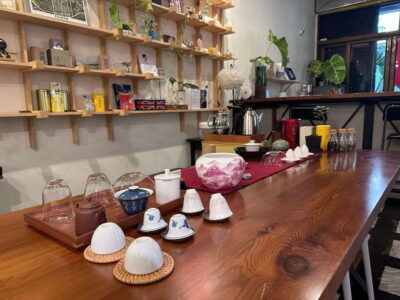
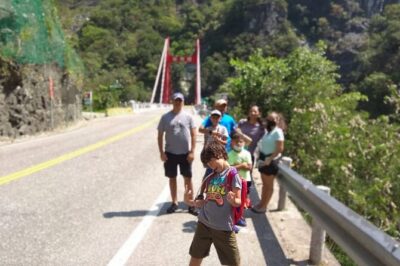
2025 Taroko Gorge Tour Excellent Cultural Stories , 8 Hours
Read our review →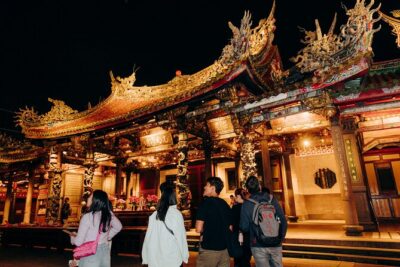
Taipei’s Origin & Longshan Temple – Taiwan Cultural Walking Tour
Read our review →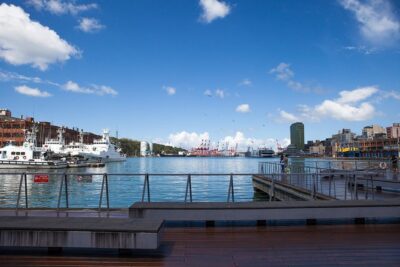
Private Keelung Cultural Walk: Markets, Streets & Local Life
Read our review →
Browse the lists this tour appears in