
Reviewed · COOKING CLASSES
Taiwanese Breakfast Cooking Class in Taipei
Taiwanese breakfast is not a quick pastry and coffee affair. It is hot, savory, hands-on food, and this two-hour CookInn Taiwan class gives you a practical way to understand it. You’ll make scallion pancakes from scratch, learn dan bing, the soft egg crepe, and prepare soy milk from actual soybeans.
I like the small group size, capped at 10, and the fact that you eat dishes you have made yourself. I also like the useful focus: these are familiar breakfast foods you may want to try again at home. The main consideration is the $79 price, which is more than a typical Taipei breakfast, so the value depends on how much you want the instruction and cooking time.
Key points to know before booking
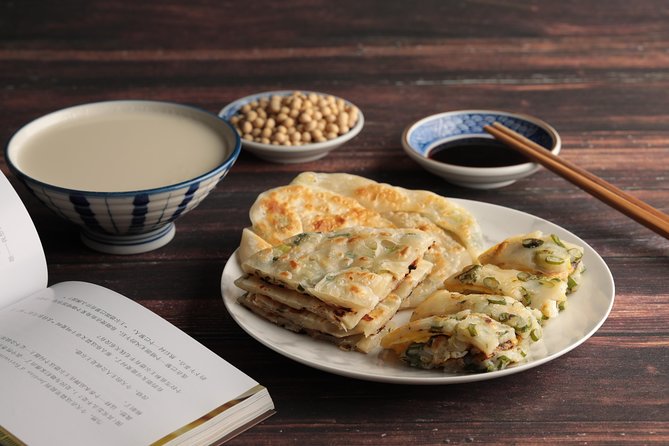
- Three classic breakfast dishes: Make multi-layered scallion pancakes, soft dan bing, and fresh soy milk from soybeans.
- A compact morning class: The session starts at 9:30 am and lasts about two hours, leaving much of the day free.
- A small, hands-on setting: The class accepts a maximum of 10 people, so you should expect active participation rather than a large demonstration.
- A central Taipei meeting point: CookInn Taiwan’s Ximen classroom is at 105 Bo’ai Road, fourth floor, in Zhongzheng District, near public transportation.
- Personal instruction: Diana and the CookInn team lead the class and are noted for taking time with students as they learn.
- Easy pairing with another class: Some people schedule this breakfast class alongside CookInn Taiwan’s xiaolongbao, beef noodle, or bubble tea classes.
Why Taiwanese breakfast makes a good cooking class
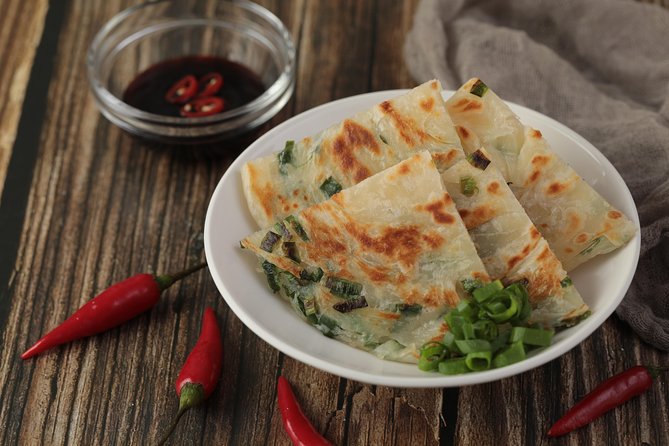
Taiwanese breakfast is built around food that is simple in appearance but less simple to get right. A scallion pancake may look like a flat piece of dough, yet its appeal comes from thin layers, a crisp surface, and the soft, fragrant scallions inside. Dan bing is also modest-looking, but its tender egg crepe depends on a gentle texture rather than a heavy, firm pancake.
That makes this a useful class for you if you want more than a cooking demonstration. You are working with three everyday foods that help explain how Taiwanese people eat in the morning. The dishes are warm, filling, and approachable, with no need for advanced culinary experience.
I also like the balance of the menu. The scallion pancake gives you dough and texture. Dan bing brings egg and softness. Soy milk adds a fresh drink made from a basic ingredient. Together, they create a full breakfast rather than three unrelated samples.
The class is especially appealing if you have already eaten Taiwanese breakfast and wondered how the food is made. It gives you a closer look at dishes that can be easy to order but harder to reproduce. You leave with techniques to remember, not only photographs of a meal.
Other kitchens to cook in around Taipei:
- Xiao Long Bao, Beef Noodles & Boba Tea Cooking Class in Taipei
★ 5.0 · 159 reviews - Xiao Long Bao, Chicken vermicelli with mushroom and sesame oil, Tofu strips salad, Bubble milk tea. Taiwan Traditional Delicacies Experience-A (Taipei Cooking Class)
★ 5.0 · 79 reviews - Taipei Cooking Class & Market Adventure in Historic Dadaocheng
★ 5.0 · 77 reviews
Meeting Diana and starting at 9:30 am
The class begins at 9:30 am at CookInn Taiwan’s Ximen classroom, located at 105 Bo’ai Road, fourth floor, in Taipei’s Zhongzheng District. The venue is near public transportation, which matters for an early start. You will need to plan enough time to reach the address without rushing, especially if you are unfamiliar with Taipei’s streets.
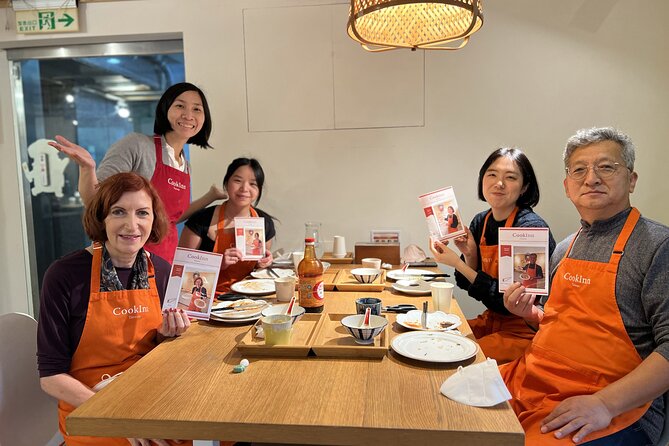
The class is led by Diana and the CookInn Taiwan team. Their teaching style appears to be attentive and friendly, with time set aside for students to learn the skills rather than simply watch a chef work. That point matters in a small cooking class. If the instructor moves too quickly, dough handling and egg preparation can become hard to follow. Here, the format is intended to keep you involved.
A maximum of 10 people keeps the group manageable. It is not a private lesson, but it is small enough for the instructor to guide the group through the recipes. The compact size also suits couples, families, and solo visitors who want a social activity without joining a large crowd.
The start time shapes the whole experience. This is a real breakfast-hour class, not a late-morning cooking event with a breakfast theme. You will need to be ready early, but you also get the rest of the day for Taipei sightseeing, shopping, or another class.
Making scallion pancakes from scratch
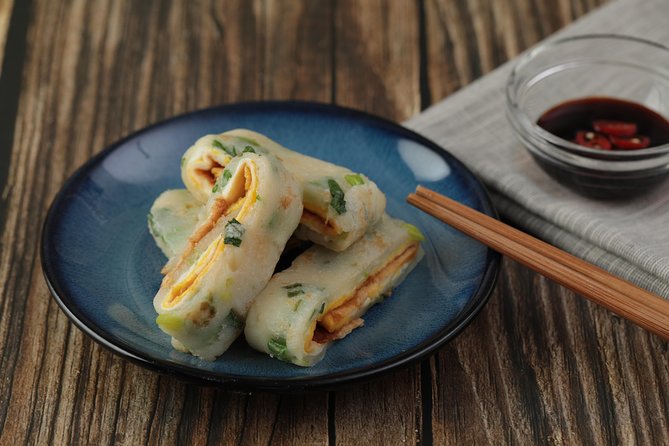
The scallion pancake is likely the most technique-focused part of the morning. You will make the dough from scratch and learn how to create its layered structure. The finished pancake is meant to have several thin layers rather than the texture of a plain bread-like flatbread.
This is where hands-on instruction earns its keep. A written recipe can tell you what ingredients to use, but it does not always show how the dough should feel or how the layers come together. With an instructor present, you can pay attention to the steps that affect the final texture.
The pancake also gives you a good lesson in contrast. The outside should be crisp, while the inside remains tender enough to pull apart. The scallions provide a fresh, savory flavor that keeps the dish from feeling heavy.
I would pay close attention during this section and avoid treating it as a quick appetizer. If you are hoping to repeat the recipe at home, the shaping process is the part most worth remembering. The class description specifically emphasizes the multi-layered result, so this is more than a simple mix-and-fry exercise.
For children or first-time cooks, the scallion pancake can be the most entertaining dish because it involves dough and a visible transformation. For anyone nervous about cooking, it also provides a clear goal: produce a warm pancake with layers you can see and taste.
Learning the soft texture of dan bing
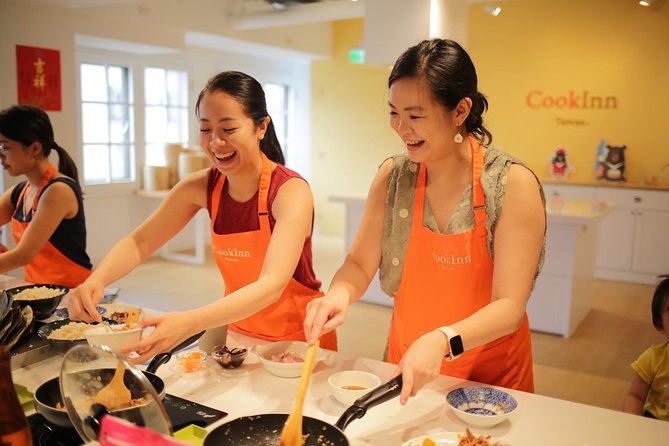
Dan bing is a Taiwanese egg crepe, and the focus here is its tender, soft texture. It is a different lesson from the scallion pancake. Instead of working toward crisp, flaky layers, you are learning how to make a delicate breakfast item that stays light and flexible.
This is a useful part of the class because dan bing can be misunderstood as an ordinary omelet or egg pancake. The name and basic ingredients may sound familiar, but the texture gives it a distinct place in Taiwanese breakfast culture. The class teaches you the method behind that texture.
I like that the menu includes both dough and egg preparation. If the class taught only pancakes, the morning could feel repetitive. Dan bing changes the pace and gives you another technique to take home.
The egg crepe is also likely to be the most approachable recipe for young cooks or anyone who does not want to handle dough throughout the entire class. You can compare the two dishes directly: one is built around layers and crispness, the other around softness and tenderness.
The class description calls attention to the secrets of making dan bing tender. That suggests you should listen closely to the instructor’s timing and handling advice. The supplied details do not specify every step, so I would not book this expecting a printed, fully detailed recipe unless the school provides one on the day. Book it for the guided practice and the chance to eat the result while it is fresh.
Same base, a completely different day out:
- From Taipei: Shifen, Jiufen, and Yehliu Guided Day Trip
★ 4.6 · 1,654 reviews - Full-Day Private Custom Taipei City Tour
★ 5.0 · 911 reviews - From Taipei: Yehliu, Jiufen, and Pingxi Day Tour
★ 4.7 · 892 reviews - Taipei: Jiufen Night View and Shifen Day Tour
★ 4.6 · 870 reviews
Preparing soy milk from soybeans
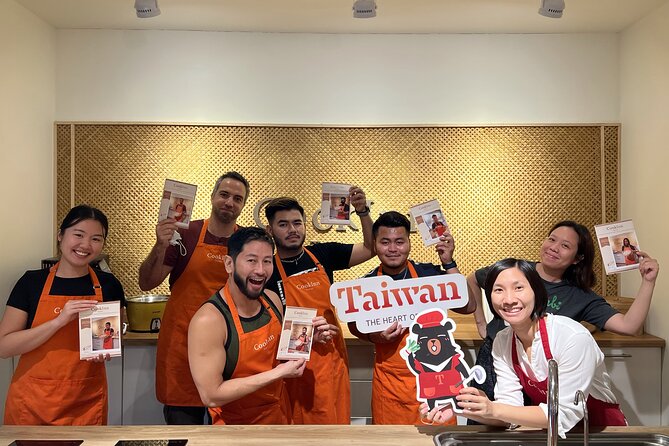
Fresh soy milk completes the breakfast. Rather than serving a packaged drink alongside the dishes, the class has you make soy milk from soybeans. That makes the drink part of the cooking lesson, not an afterthought.
Soy milk may seem simpler than the pancakes, but making it from the starting ingredient gives you a clearer sense of what goes into a common Taiwanese breakfast beverage. It also rounds out the menu with something smooth and mild beside the savory food.
This is a nice detail for anyone interested in ingredients and process. You are not only learning how to cook a dish in a pan. You are also working with soybeans and seeing how a familiar drink begins.
The three recipes together make the class feel complete. The scallion pancake offers crisp layers, dan bing offers a soft egg texture, and soy milk provides a drink made from scratch. You get variety without the menu becoming scattered.
Because the class lasts about two hours, the soy milk section is part of a tightly planned morning. You should expect a practical session rather than a long food lecture. The emphasis is on making and eating breakfast.
What the small group means for your morning
A maximum of 10 participants is one of the strongest practical features. A small class can make a difference when several people need help with dough, egg preparation, or timing at the same time. You are more likely to see the instructor’s demonstrations clearly and get a chance to ask a question.
The format is hands-on, not simply a chef cooking in front of you. That distinction matters. If you prefer to sit back and sample food, this may feel more active than expected. If you want to learn a skill, the participation is the point.
Diana and the staff are described as taking time with students as they learn. I would see that as especially useful for families or people who do not cook often. You can make mistakes in a guided setting and still finish with breakfast.
The small group also works well for people combining classes. CookInn Taiwan offers other food classes, including a xiaolongbao and beef noodle class, as well as a class featuring xiaolongbao and bubble tea. Some participants schedule two classes in one day. That can be an efficient way to build a food-focused itinerary, but you should consider how much eating and cooking you want to fit into one day.
Is $79 a fair price?
At $79 per person, this is not the cheapest way to eat breakfast in Taipei. Local breakfast shops offer inexpensive dishes, and part of the pleasure of Taiwanese breakfast is ordering from a casual neighborhood counter.
The class is selling instruction, ingredients, a prepared activity, and a meal. You are paying for the time spent making three items, not just for the food on the plate. The small group and hands-on format strengthen the value, particularly if you want to recreate scallion pancakes, dan bing, or soy milk after your trip.
I would consider the price reasonable for a visitor who enjoys cooking and wants a structured morning activity. It is less compelling if your main goal is simply to eat a cheap local breakfast. You can do that elsewhere for far less.
The class also gives you a way to make sense of breakfast foods you may encounter around Taipei. After learning the basics, you may look at a breakfast stall differently. You will know that the flat pancake in the display case represents more than a quick snack, and that texture is a large part of the appeal.
The strongest value comes when you use the class as part of a wider food plan. Eat Taiwanese breakfast at a local shop on another morning, then compare it with what you learned to make. That gives you both the everyday experience and the guided lesson.
Who should book this class
I would recommend it most strongly to:
- Home cooks: You get three recipes and techniques that are practical enough to revisit.
- Food-focused visitors: The class explains familiar Taiwanese breakfast items through direct preparation.
- Families with older children: The menu is accessible, and the hands-on format gives children something real to do.
- Couples and friends: A small group makes the morning social without requiring a full private booking.
- Repeat visitors to Taipei: If you have already seen the major sights, this adds a more active food experience.
- People pairing cooking classes: The 9:30 am start leaves room for another CookInn Taiwan class later, although you should plan your appetite carefully.
I would be more cautious if you dislike early starts, prefer sightseeing to structured activities, or want the lowest-cost breakfast possible. The cooking requires participation, so it is not ideal for someone who wants a passive tasting.
Most people can participate, according to the supplied activity information. Still, the details do not spell out specific accommodations, dietary substitutions, or kitchen access arrangements. If those issues matter to you, ask CookInn Taiwan before booking.
Practical details for a smooth visit
Confirmation is provided when you book, and the activity uses a mobile ticket. Keep the ticket available on your phone and allow time to find the fourth-floor classroom at CookInn Taiwan’s Ximen location.
The activity begins and ends at the same meeting point. That makes planning easier, especially if you have a later reservation. It also means you do not need to arrange a separate pickup or find your way to a second location after breakfast.
The class lasts approximately two hours. Since the start time is 9:30 am, you should be finished around late morning, though the exact ending may vary slightly with the pace of the group.
Free cancellation is available if you cancel at least 24 hours before the start time. Changes or cancellations inside that window are not accepted for a refund. The activity also requires suitable weather and a minimum number of participants. If CookInn Taiwan cancels for either reason, you are offered another date or experience, or a full refund.
The weather condition may seem unusual for a cooking class, so check the status if Taipei conditions are poor. Do not assume the class will operate simply because the activity takes place indoors.
Should you book the Taiwanese Breakfast Cooking Class?
Book it if you want to learn three recognizable Taiwanese breakfast foods in a small, active class. The strongest reasons are the practical menu, the two-hour schedule, and the chance to work with Diana and the CookInn Taiwan team rather than only watch a demonstration.
At $79, it is best viewed as a food lesson with breakfast included, not as a cheap meal. If you enjoy cooking, that makes the cost easier to justify. If you only want to taste local food, spend the money at several breakfast stalls instead.
For a first visit to Taipei, I like this as a morning activity that leaves the rest of the day open. For repeat visitors, it offers a hands-on look at everyday food. Just arrive ready to cook, keep your mobile ticket handy, and remember that the value lies in learning how the food is made.
FAQ
Where does the Taiwanese breakfast cooking class meet?
The class meets at CookInn Taiwan’s Ximen classroom at 105 Bo’ai Road, fourth floor, in Zhongzheng District, Taipei. The location is near public transportation.
What time does the class start?
The class starts at 9:30 am.
How long does the experience last?
The cooking class lasts approximately two hours.
What foods will I make?
You will make multi-layered scallion pancakes, dan bing egg crepes, and fresh soy milk made from soybeans.
How many people can join the class?
The activity has a maximum of 10 participants.
Does the class end at the same place where it begins?
Yes. The activity ends back at the CookInn Taiwan meeting point.
Can I cancel for a full refund?
Yes, if you cancel at least 24 hours before the experience start time. Cancellations or changes made less than 24 hours before the start time are not refunded or accepted.
Just added around Taipei
- Taipei: 8 Hours Private Day Tour in Wulai with Benz Vito★ 4.4 · 5 reviews
- Vintage Taipei – Best of Taiwan and Sunset Walking Tour★ 5.0 · 4 reviews
- Yilan 1-Day Private Tour to Kavalan Whisky & Cultural Gems★ 4.5 · 3 reviews
- Best of Taiwan 9 Days Tour★ 3.5 · 3 reviews
- Xiao Long Bao, Chicken vermicelli with mushroom and sesame oil, Tofu strips salad, Bubble milk tea. Taiwan Traditional Delicacies Experience-A (Taipei Cooking Class)★ 5.0 · 8 reviews
- Private Yangmingshan National Park Hiking Day Tour from Taipei★ 5.0 · 5 reviews
- Two-day Sun Moon Lake & Alishan Forest Park Tour Package★ 4.0 · 5 reviews
- Xiao Long Bao, Chicken vermicelli with mushroom and sesame oil, Tofu strips salad, Bubble milk tea. Taiwan Traditional Delicacies Experience-A (Taipei Cooking Class)★ 5.0 · 5 reviews
Cooking Classes, compared.
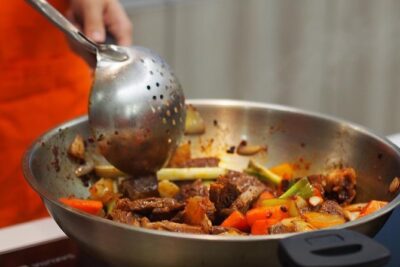
Xiao Long Bao, Beef Noodles & Boba Tea Cooking Class in Taipei
Read our review →
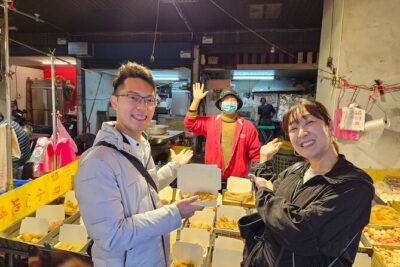
Taipei Cooking Class & Market Adventure in Historic Dadaocheng
Read our review →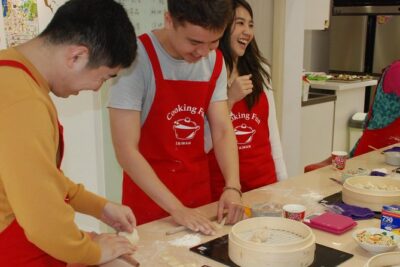
Xiao Long Bao, Pork thick soup, Bubble milk tea. Taiwan Traditional Light Meals Experience-B (Taipei Cooking Class)
Read our review →
Street Food Cooking Class in Taipei : Gua Bao/Lu Rou Fan/Boba Tea
Read our review →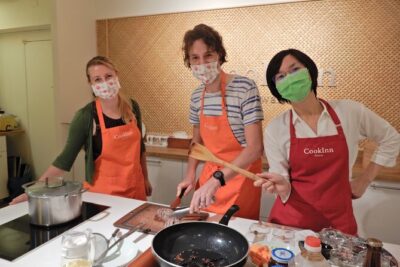
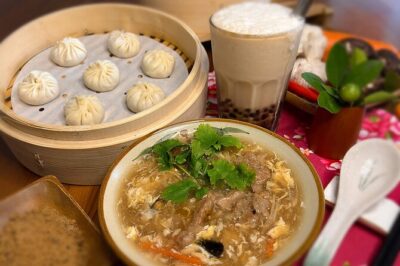
Xiao long bao, Pork thick soup, Bubble milk tea. (Taiwan Cooking Class)-B
Read our review →
Browse the lists this tour appears in